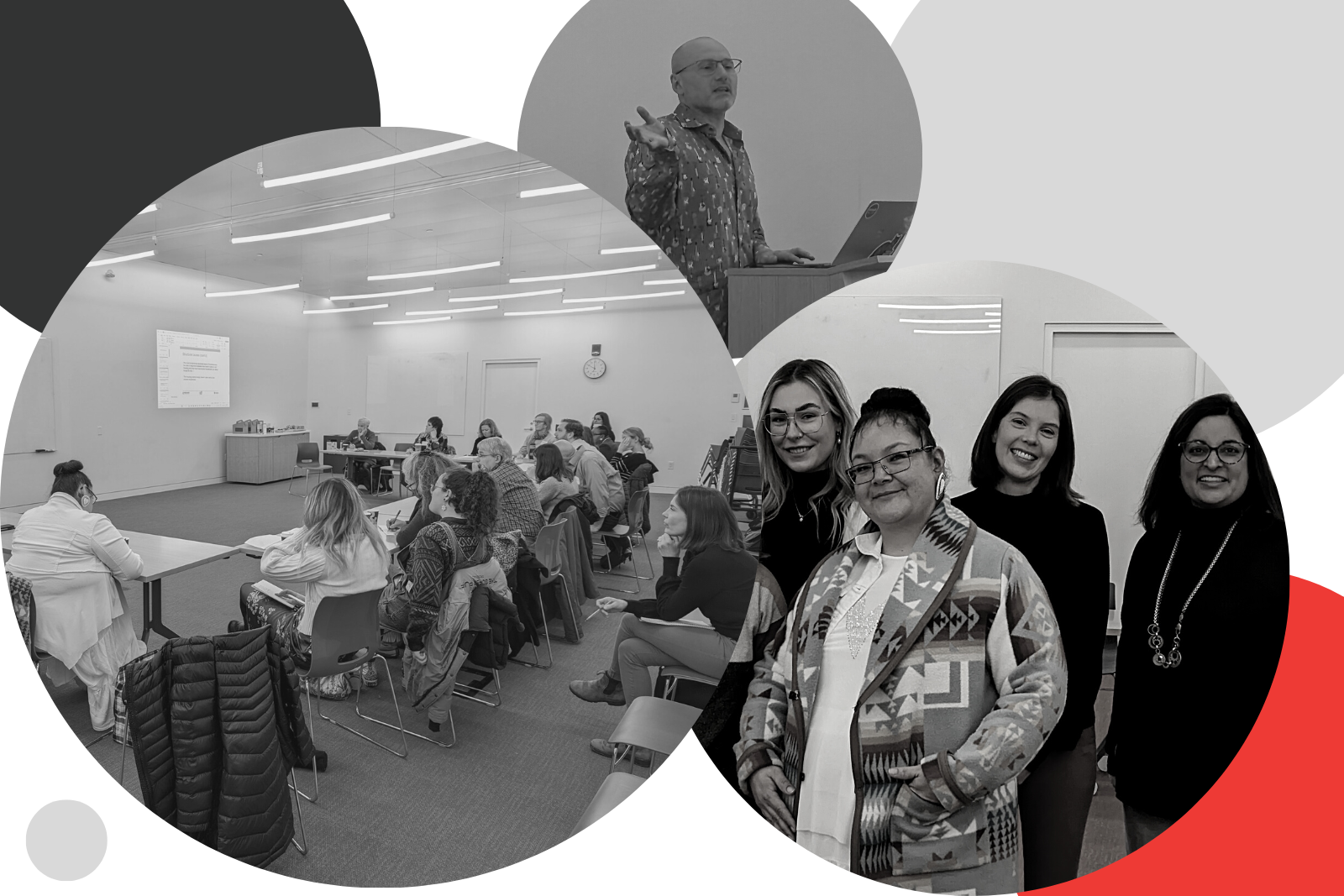
Vibrant Communities Calgary hosted a workshop with Dr. Nick Falvo on housing and houselessness on Dec. 5. VCC staff and representatives from a dozen Enough for All Champion organizations spent the morning learning about the root causes of houselessness and innovative work being done in the sector. Here are the top five things I learned:
- Researchers know what causes houselessness. Houselessness is caused primarily by – structural factors, like when rental prices are high and vacancy rates are low or when incomes do not keep up with increasing rental costs; individual risk factors, like experiencing physical abuse as a child; when individuals are set up to fail by systems and institutions, like when aging out of the foster care system or being released from prison.
- Individual risk factors that increase someone’s likelihood of experiencing houselessness are typically out of that person’s control. The greatest risk factor is spending time in the foster care system as a child. Someone who has spent time in foster care is 3.7 times more likely to end up unhoused.
- Canada’s aging population means that the use of shelters by older adults is on the rise. Older adults also stay in homeless shelters longer than any other age group.
- Colonialism, racism, and discrimination mean that Indigenous men are ten times more likely to use a homeless shelter than non-Indigenous men, and Indigenous women are fifteen times more likely to use a homeless shelter than non-Indigenous women. Indigenous people also experience discrimination when seeking safe, stable long-term housing, which means they tend to cycle in and out of shelters rather than stay for long periods of time.
- One way to reduce houselessness is to increase the amount of affordable housing available and ensure that income supports are adequate to meet basic needs. Over 24,000 Albertans are on the waiting list for affordable housing.
One of the best parts of the workshop was the rich discussion among participants. Everyone in attendance brought different perspectives and experiences to the table, leading to some great conversations. VCC staff walked away with ideas for future areas of advocacy.