Structured as a conversation, this blog brings together an academic expert and a community researcher to reflect on how to build strong research partnerships.
Dr. Brian R. Sinclair is an award-winning Professor of Architecture and Environmental Design at the University of Calgary’s School of Architecture, Planning, and Landscape. Tessa Penich leads Vibrant Communities Calgary’s research portfolio and has a strong background in qualitative research and community-academic partnerships.
Tessa Penich: Research is an important part of Vibrant Communities Calgary’s poverty-reduction mandate. Lately, we’ve been asked about community-academic partnerships and how to do them well. We know working together is essential for research that leads to real-world impact. However, the primary narrative around these partnerships is that they’re difficult—extractive, slow, and undervalued. So, I connected with Dr. Brian R. Sinclair, a friend of VCC and a Principal Investigator on the Quality in Canada’s Built Environment research project, to talk about why our partnership on that project has been different.
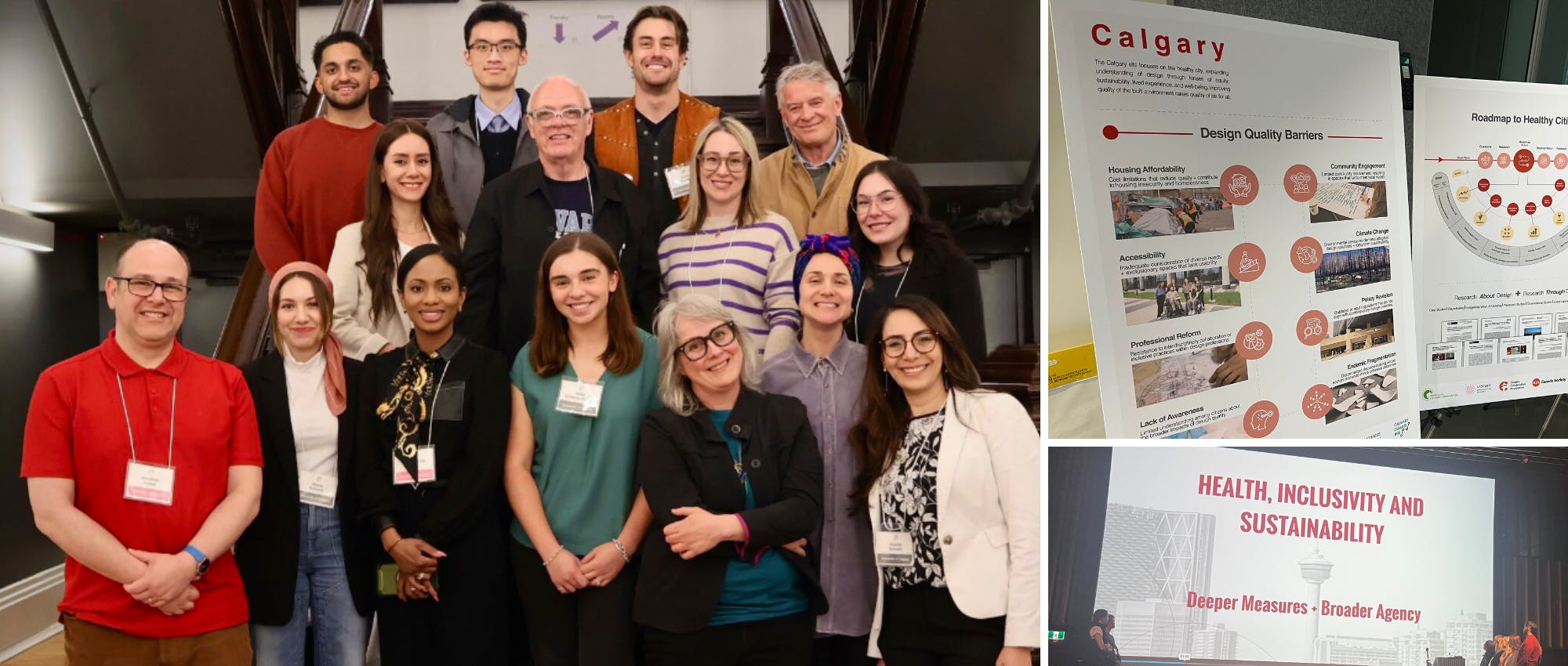
Dr. Brian Sinclair: To provide some context, I am the Calgary Lead on an unprecedented pan-national and intersectoral research initiative, called “Quality in Canada’s Built Environment” (funded by the Social Sciences and Humanities Research Council). This unique project looks at how we design our cities, communities, and public spaces—and how we can do it better.
Historically, architecture and its allied professions have relied on narrow definitions of design quality: for example, viewing buildings as sculptures or prioritizing appearance over function. When they reviewed our initial research proposal, the granting agency stressed we needed to totally rethink how we view design, and how we intended to research and reform it. In simple terms, they asked us to include the people and organizations who experience and shape these spaces every day. Based on this feedback we changed our perspective, broadening our understanding of research and researchers to include not only academics, but also government, industry, and community organizations. Of these four groups, it is the community or citizen organizations, such as VCC, that demonstrably bring the most potency and greatest value. We included VCC as a core community partner due to their exceptional traction on addressing research, analyzing data, and grasping big challenges. In our journey together (now in year 4 of a 5-year grant), VCC has proven a remarkable contributor over a range of our research pursuits—for example, lecturing in university classrooms, conversing across disciplinary boundaries in roundtables, considering ways of understanding design from novel vantage points, and so forth. The collaboration has been productive, provocative, and rewarding.
Tessa: There were two key reasons we said yes to becoming a community partner on this project. The first is that we saw strong alignment with our mandate to reduce poverty and increase well-being. We liked that the research was focused on systems change, rather than individual people. We’d never considered how the design of public spaces and cities was linked to poverty, and it was an exciting new lens through which to see our work.
The second reason is that Brian had established relationships with other community organizations that we trusted. He and his students had previously been involved with the Indigenous Gathering Place, and they spoke very highly of him. It was clear this was someone who built lasting reciprocal relationships and was already invested in community building. It’s important for academics to leave campus and spend time in the community—become familiar faces, attend meetings and events, and build trust over time.